- Asbestos
- O. Reg. 278/05
- Surveys
It is more thorough than a survey for occupied buildings because demolition disturbs everything. Here is what it covers.
1. Why demolition surveys are different
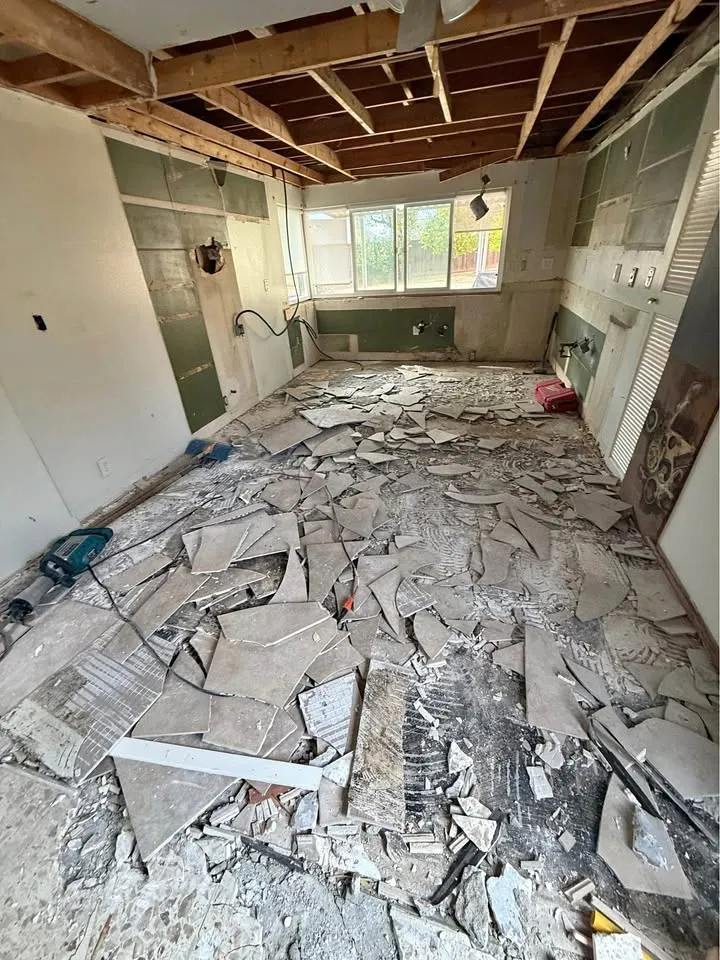
A survey for a building that stays in use can leave concealed spaces alone. A pre-demolition survey cannot, because the demolition will open every wall, ceiling and floor. Surveyors may cut small openings, lift flooring and look inside chases to find materials that would otherwise be hidden until the machines arrive.
2. Materials commonly sampled
In Toronto houses and commercial units, surveyors typically sample:
- Plaster and drywall joint compound.
- Vinyl floor tiles, sheet flooring and their adhesives.
- Pipe and boiler insulation, including elbows and fittings.
- Vermiculite insulation in attics and walls.
- Ceiling tiles, stucco and textured ceiling finishes.
- Roofing materials, caulking and some cement board siding.
3. What the report tells you
A good report includes the location of each sample, the lab result, the type of asbestos, the condition of the material and an estimate of quantity. It should include drawings or photos so the removal contractor can find everything. It also identifies materials assumed to contain asbestos where sampling was not possible.
4. How the results shape the work
Under O. Reg. 278/05, asbestos work is classified as Type 1, Type 2 or Type 3 depending on the material and the method used to disturb it. Each type has its own requirements for enclosures, protective equipment, ventilation and training. Type 3 operations, the highest-risk group, also require notice to the Ministry.
Asbestos that will be disturbed by demolition generally has to be removed first. Clearance is then confirmed before general demolition starts. We explain the follow-on steps in what happens when the survey finds asbestos.
5. What it depends on
The scope and cost of a survey depend on the building's size and age, how much will be demolished and how accessible concealed spaces are. For a single room, surveyors may only sample the materials in that room. For a whole-house teardown, the survey covers the whole building, including the attic, basement and exterior.
6. Choosing a consultant
Look for a consultant with experience in pre-demolition surveys, not just occupied-building inspections. Ask whether they will open concealed spaces, how many samples they expect to take, which lab they use and how they present findings.
The survey should be complete enough that the abatement contractor can price and plan the removal without guessing. A cheap survey that misses materials costs far more when the demolition has to stop part way through.
7. What we do about it
We read the survey before we write the scope for any interior demolition or commercial strip-out. If we open something during work that looks like it was not sampled, we stop and have it checked. Book a free estimate and bring the survey if you have one.
Frequently asked questions
- Can I test for asbestos myself?
- Home test kits exist, but a pre-demolition survey should be done by a qualified consultant with lab analysis so it can be relied on for the project.
- How long does a survey take?
- It depends on the building's size and the lab's turnaround. A house is often inspected in one visit, with results following from the lab.
- Does every older house have asbestos?
- Not every one, but asbestos was common in building materials for decades. Only testing can confirm it.
- What if the survey missed something?
- Work stops as soon as a suspect material is found, and it is tested before work continues.
- Is the asbestos survey part of the Designated Substance Survey?
- Yes. Asbestos is one of the designated substances the owner must identify under OHSA section 30.