- Deconstruction
- Salvage
- Planning
Most real jobs sit somewhere in between. Here is how to decide.
1. What deconstruction involves
In a deconstruction, crews remove fixtures, trim, doors, cabinets, flooring and sometimes framing lumber piece by piece. Materials are cleaned, stacked and sent for reuse or resale. It takes more labour and more time, but more of the building stays out of landfill.
2. What conventional demolition involves
Conventional demolition uses excavators, skid-steers and other equipment to bring down the structure after any hazardous materials have been removed. Debris is then sorted into streams such as wood, metal, concrete and mixed waste. It is faster and needs fewer workers on site.
3. When each one makes sense
The choice depends on a few factors:
- Salvage value: solid hardwood floors, old-growth framing, brick and quality millwork favour deconstruction.
- Site access: a narrow North York lot with houses a few feet away can favour hand work near the property lines.
- Schedule: if a builder is waiting, conventional demolition is usually quicker.
- Condition: fire- or water-damaged buildings have little to salvage and can be unsafe to work inside.
- Your goals: some owners want materials donated or reused, and some green building programs reward diversion.
4. The hybrid approach most jobs use
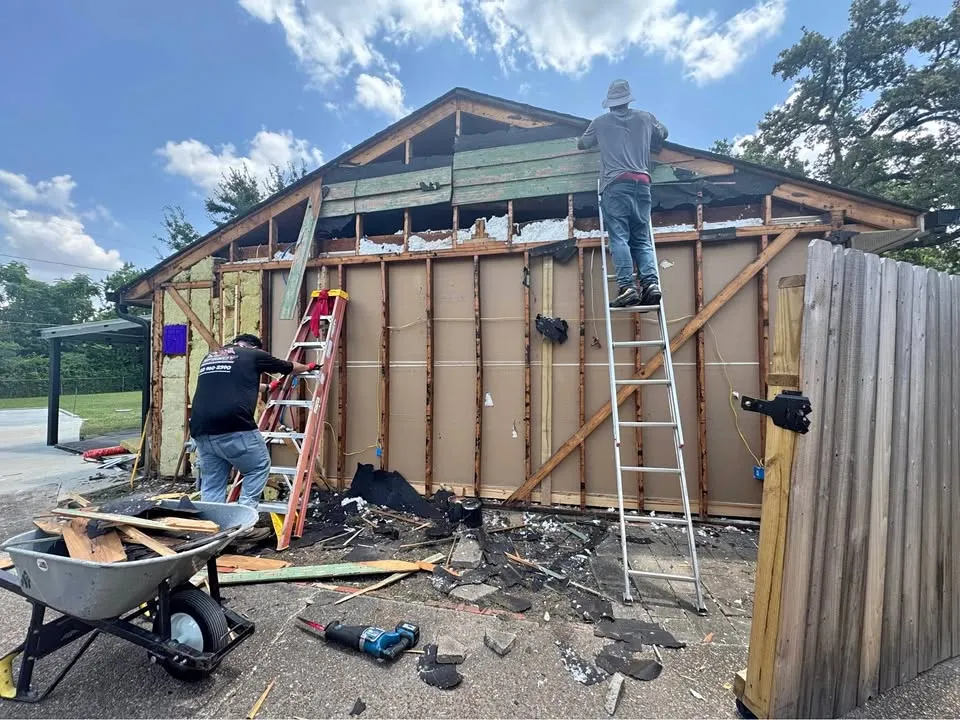
In practice we often strip a building by hand first and then bring the frame down with equipment. You can see that in our residential demolition photos, where siding and sheathing come off by hand before the frame is taken down. Interior fixtures in good condition can be removed intact during the same stage. This gets most of the diversion benefit without the full time cost of deconstruction.
5. What to ask a contractor
Ask which materials they expect to salvage, where they will go, and how the stripping stage will affect the schedule. Ask how they will protect neighbouring properties during machine work. If reuse matters to you, write it into the scope so it is not dropped when time gets tight.
6. What happens to the materials
Diversion only counts if materials actually go somewhere useful. Clean dimensional lumber, doors and cabinets can go to reuse centres or be taken by the owner. Metal is sold for recycling. Concrete and brick can be crushed for fill. Drywall and mixed debris are harder to divert and often end up in landfill.
Ask your contractor where each stream goes. A clear answer is a good sign they plan to separate materials rather than just promise it.
7. Costs and trade-offs to weigh
Deconstruction needs more hours on site, so the trade-off is time and labour against salvage and diversion. Some owners recover part of that through resale or donation receipts, but results vary widely with the building and the market for used materials.
8. What we do about it
We plan the hand-stripping stage on every job and separate materials as we go. If you want cabinets, fixtures or doors removed intact for reuse, tell us on the visit and we will write it into the scope. For renovation work, see our interior demolition service. Book a free estimate to discuss the right mix for your site.
Frequently asked questions
- Is deconstruction always better for the environment?
- It usually diverts more material, but the benefit depends on whether salvaged items actually get reused. A good hybrid job can divert a large share too.
- Does deconstruction take longer?
- Yes. Removing materials by hand takes more labour and time than machine demolition.
- Can you save my cabinets for reuse?
- Yes. Tell us on the site visit and we will remove them intact and set them aside.
- Is deconstruction safe on a fire-damaged house?
- Often not. Fire-damaged structures can be unstable, and there is little to salvage, so controlled demolition is usually safer.