- Contracts
- Scope
- Owners
You don't need to be a contractor to read one well. You just need to know which sections matter and what they should contain. Let's go through them.
1. Project description and site
The opening section should name the address, describe the building, and say in a sentence or two what the job is. "Demolish detached garage and remove slab" is clear. "Demolition work as discussed" is not. If it's a partial job, the description should say which part.
2. What's coming out and what's staying
This is the heart of the document. Look for a room-by-room or element-by-element list. For interiors, it should say how deep removal goes: finishes only, down to studs, or down to slab. For a house, it should say whether foundations and slabs are removed. Just as important is the list of what stays:
- Structural walls, beams and posts.
- Plumbing stacks, electrical panels and gas lines.
- Trees, fences, driveways and neighbouring structures.
- Items the owner wants to keep or salvage.
3. Who handles the paperwork
A good scope says who's responsible for the demolition permit, the Designated Substance Survey, any asbestos removal, and each utility disconnect. If it's silent, assume nobody's doing it. Our guide to demolition paperwork lists what should be covered.
4. Site protection and hours
Look for how the contractor will protect what's staying: floor sheeting, barriers, hoarding or fencing. For condos and commercial buildings, the scope should reflect building rules on hours, elevators and loading. It should also respect the City's noise bylaw.
5. Debris and the finished condition
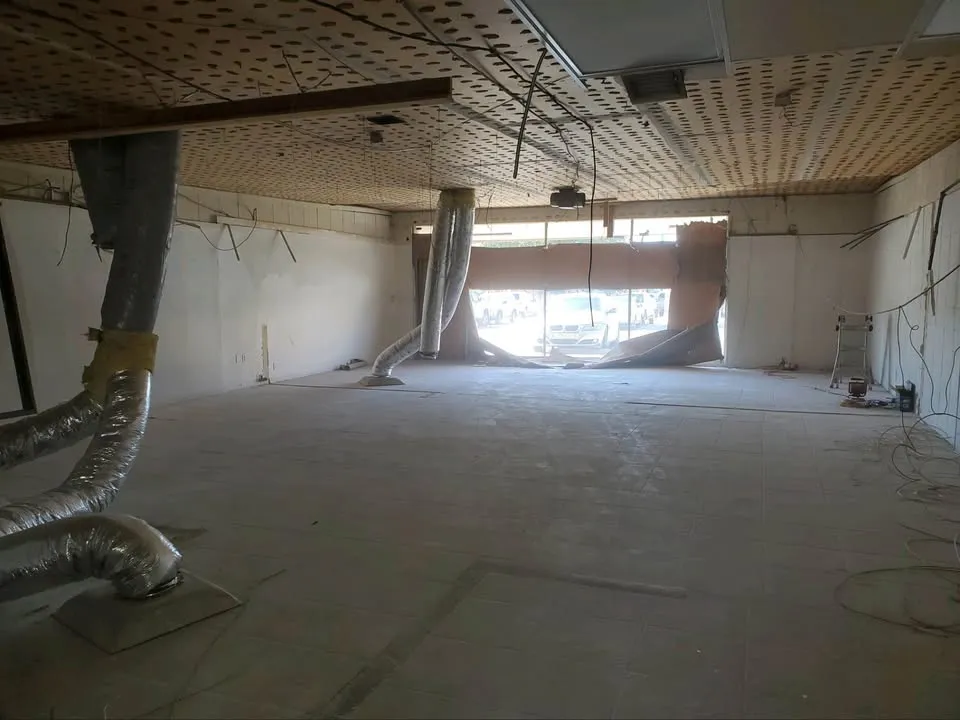
The scope should say how debris leaves the site and what the site looks like at the end. "Broom-swept" for an interior, "clear lot" for a house. If you expect backfill or grading, it needs to be written down. On a commercial strip-out, the finished condition often comes straight from the lease.
6. Exclusions and unknowns
Every scope has exclusions. That's fine, as long as they're listed. Watch for how the scope handles surprises, like hidden asbestos or unexpected structure, so you know what happens if one turns up.
7. When it makes sense to bring in a professional
For a big or complicated job, ask the contractor to walk you through the scope in person on site. If there's structural work, your engineer should review the scope too. A good contractor won't mind explaining any line. See how we set scopes for interior demolition.
8. Red flags to watch for
Some wording should make you ask more questions:
- "As required" or "as needed" without saying who decides.
- No mention of the survey or asbestos at all on an older building.
- A finished condition that just says "clean" with no detail.
- Nothing about protecting neighbouring property.
- No list of exclusions, which usually means they haven't thought about them yet.
9. Comparing scopes from different contractors
If you're getting more than one estimate, line the scopes up side by side. The cheapest isn't always the cheapest once you notice it leaves out debris removal or disconnects. Compare what's included, not just the bottom line.
10. Schedule and sequence
A scope doesn't always include dates, but it should say the order of work. That matters when other trades are involved. If an electrician has to make circuits safe before the crew starts, or an abatement contractor has to finish first, the scope should say so. When the sequence is written down, nobody shows up to a site that isn't ready for them, and you're not paying for a crew standing around waiting.
11. Conclusion
Read the scope as if you'll be arguing about it later, because that's when it matters. Make sure it lists what goes, what stays, who handles the paperwork and what the finished site looks like. At Clearpath Demolition Toronto, every job starts with a written scope reviewed on site. Request a free estimate and we'll prepare one for your project.
Frequently asked questions
- Is a scope of work the same as a contract?
- The scope usually forms part of the contract. The contract adds terms like payment, schedule and insurance.
- Can the scope change during the job?
- Yes, but changes should be agreed in writing so both sides know what's been added or removed.
- What does broom-swept mean?
- Debris removed and the floor swept clean, ready for the next trade. It doesn't mean washed or finished.
- Should the scope include photos?
- Photos or marked-up drawings help a lot, especially for showing what stays.